
 In 1962, on the 22nd of February, Steve Irwin “the Crocodile Hunter” was born. Steve is one of the most well-known conservationists and wildlife activists the world has ever known. He was and is a major inspiration to me as I pursue a career in environmental journalism and conservation.
Often times, the environment is a dreaded conversation topic because activists may sometimes come off as blaming or disapproving. The Irwin family has taken a different approach to confront the issues regarding environmental awareness.
 Rather than yelling and accusing people, they inspire people to care for the environment and wildlife by showing them how beautiful nature can be and how gentle wildlife is when you treat it kindly. This approach to environmental activism is what motives me to find a career in environmental journalism.
 On February 22nd, 2019, I was lucky enough to go on a trip to Hartley’s Crocodile Adventures, a crocodile farm north of Cairns. This farm also housed many other famous Australian animals such as wallabies, wombats, koalas, emus, cassowaries, snakes, spiders and lizards.
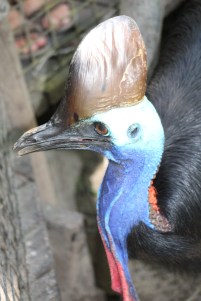
The cassowary is a well-known bird in Australia probably mostly for its size. It looks like something straight out of the dinosaur era, a massive bird with terrifyingly sharp claws, specifically the inner claw. When the bird feels threatened it will kick out its foot at its attacker and use this claw to its defense. While cassowaries are extremely dangerous out in the wild, these ones were gentle enough to take fruit right from between our fingers.
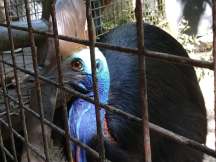 During mating season, the birds make a low humming sound that we luckily got to witness. I was shocked that I not only could hear the humming but also feel it vibrating and resonating through my body. It almost felt like a speeding motorcycle had just zipped past and rattled my soul.
 The ones at the farm were rescues that had been hit by cars and were no longer fit to live in the wild. These majestic birds live for absurd amounts of time, the youngest bird was about seven, another was 25 and the oldest was 60 years old. However, Cassowaries are an extremely endangered keystone species, according to the tour guide, there are only about 1,500 left in the wild.
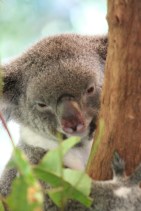
Another famous Australian species, the koala, is also facing major devastation to their population. While they aren’t on the endangered species list, koala populations have been affected by a loss of habitat. Like many species, the threat of urbanization is causing rapid devolvement of populations.
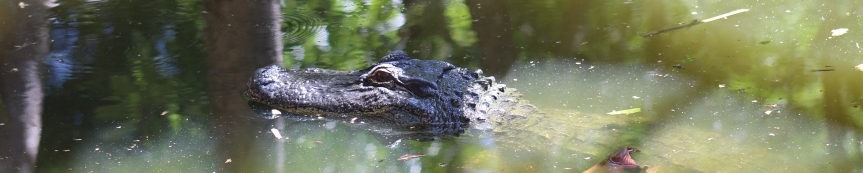
 Some types of crocodiles are listed as endangered, but saltwater crocodiles, however, are categorized as least concern. Known here as salties, these crocs are just about everywhere they can be, and despite the name, they aren’t limited to just saltwater. Some have been spotted in the Tablelands area, a popular freshwater swimming spot.
 Many locals are adamant about having the crocs removed and relocated or killed on sight. Others are advocating for the safety of the crocs claiming that they are part of the natural biome and those who come here just need to be aware and accept their presence. Truthfully, I agree with the latter. Crocs are very dangerous, but that’s the price you pay for living in this area. As a friend of mine put it, even heaven has its downsides.
 While they are not a keystone species, they still have every right to be here. The government has recently passed a law in Australia allowing the collection of wild crocodile eggs. Crocodile hunters are now legally allowed to gather wild croc eggs and hatch them to be used in luxury leather goods and for their meat, as long as they have a proper permit. You can read more about it by following this link: https://www.abc.net.au/news/2018-12-19/queensland-crocodile-hunters-can-now-harvest-eggs-from-the-wild/10632566
 I am not a crocodile expert, but personally, I believe this is wrong. Collecting wild eggs could potentially impact the wild population of crocs. Dangerous or not, people shouldn’t be playing God when it comes to the fate of certain species. The Irwin family has created a petition to revoke the recent law change. If you also wish to have the law changed, no matter where you are from, you can sign the petition by following this link: https://www.australiazoo.com.au/petition/
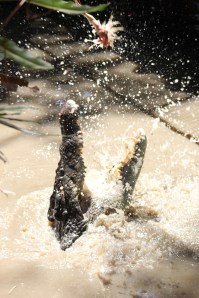 At Hartley’s croc farm, we were lucky enough to get to watch the crocs feed. They tie a piece of chicken or fish to a string hung from a long stick and splash it around near the croc’s head. It may seem like teasing, but it simulates the way crocodiles have to hunt in the wild. If they simply handed them food, the crocs would eventually become fat and lazy.
 We even got to take a ride around the lagoon enclosure on one of the boat tours. With over 20 crocs in the lagoon, we got to see a perfect habitat simulation and even witnessed how crocs fight each other in the wild. The females tend to back down from a hunt when a male enters the area, but one female didn’t seem to notice an approaching male and she got a little bit more than a nip from him.
The wildlife encounters we got to see at this farm were incredible and highly memorable. Many of the animals here are rescues unfit to be released back into the wild. Zoos are not really my favorite things because of the captivity and often neglect of the animals, but rehabilitation centers and rescues have a different place in my mind.

 kpctravels.com