


As a Midwesterner, visiting national parks has always been a special treat. Being based out of Madison, WI, the closest national park is a three-hour drive away in Indiana: the Indiana Sand Dunes. Over the years, I’ve visited the Indiana Sand Dunes multiple times. Once while it held the title of a national lakeshore, and a few times after it was established as a national park in February 2019. As one of the closest national parks to my home base in southern Wisconsin, this park has been a repeated stop along various road trips, but also as its own day trip destination.

At first glance, this park might seem like a one-and-done type of bucket list item, but the re-visitability of this park is high. In the summer, the dunes make for the perfect beach day destination. Day hikes, swimming and picnics are done best here.
Location
Indiana Sand Dunes National Park is located on the southern coast of Lake Michigan, nestled between Gary, Indiana, and the state’s border with Michigan. Its location along the segment of US Route 12 nicknamed Dunes Highway makes this park easily accessible. So hop in your car and take a day trip!
Activities
Hiking
Sand dunes may not be your first thought when you think of hiking, but you’d be surprised by the workout you get walking on sand.
My favorite trail we did was part of the West Beach 3-Loop Trail, but we only did one loop. We were intrigued by the great big staircase just off a main parking lot that led up to the top of the dunes. The aesthetic wooden stairs lead you to some of the best views of the park. This loop is called The Dune Succession Trail (Loop 1). It’ll lead you across the dunes on a destinated trail that spits you out at the beach. You can hang out at the beach for a while to cool your toes or head straight along the path that loops back into the dunes.
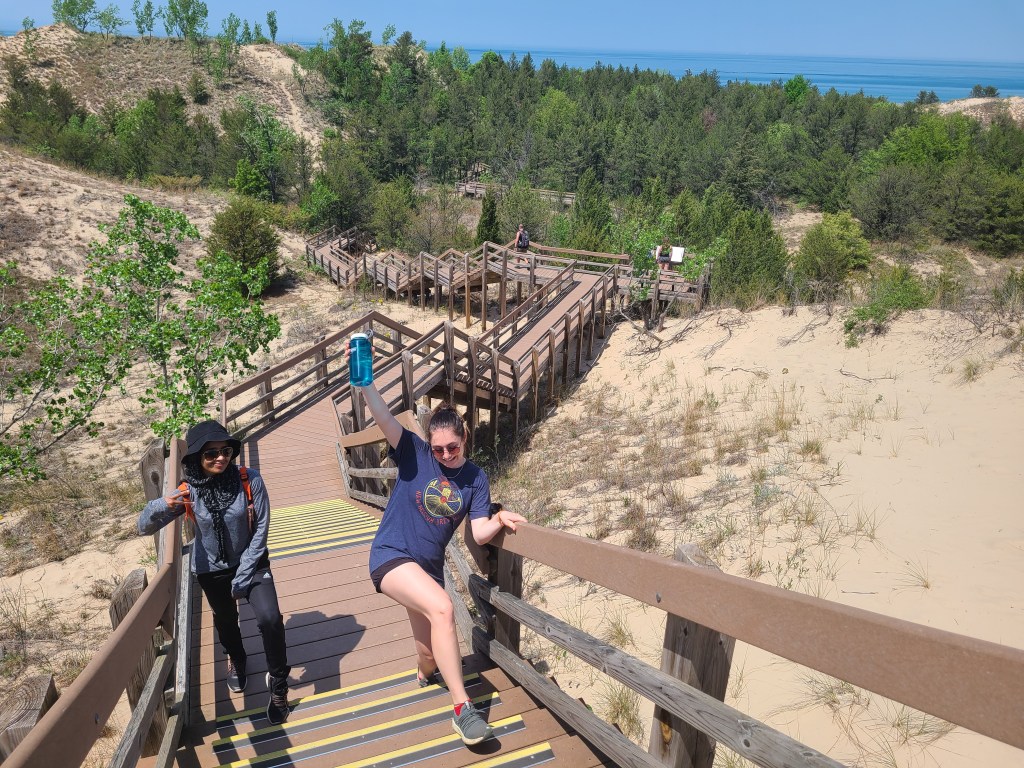
Dune Ridge Trail is a great option if you’re looking to see a lot of diverse habitats in a short period of time. This trail is only 0.7 miles and should only take about 30 minutes to complete. There are some steep slopes you’ll have to climb on loose sand, but the trail is pretty moderate otherwise.
The 3 Dune Challenge hike takes you on a loop summiting Mt. Jackson, Mt. Holden and Mt. Tom. The trailhead is just off a parking lot near some campgrounds. Although I’ve never done this hike, it is on my list for my next visit.
Find the perfect trail for you by checking the National Park Service’s website on trails at Indiana Sand Dunes. This is how I do all my research before heading to a national park.
Swimming
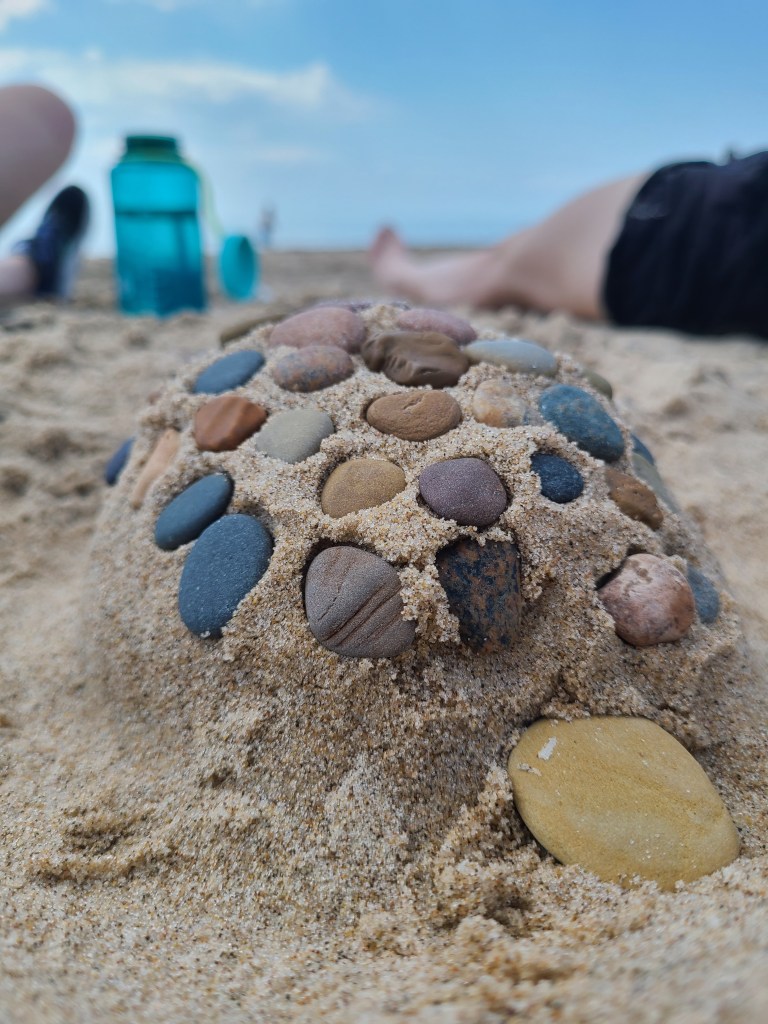
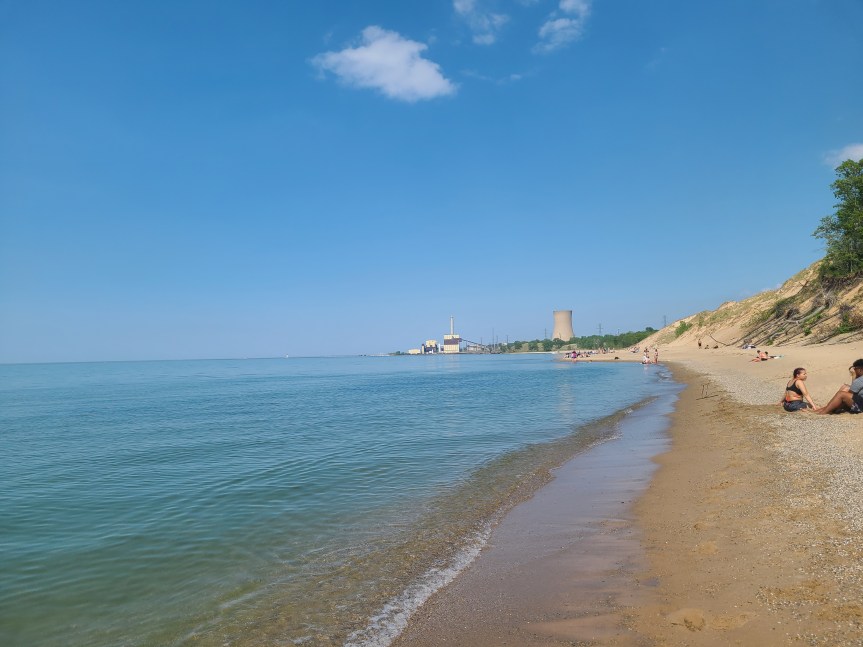
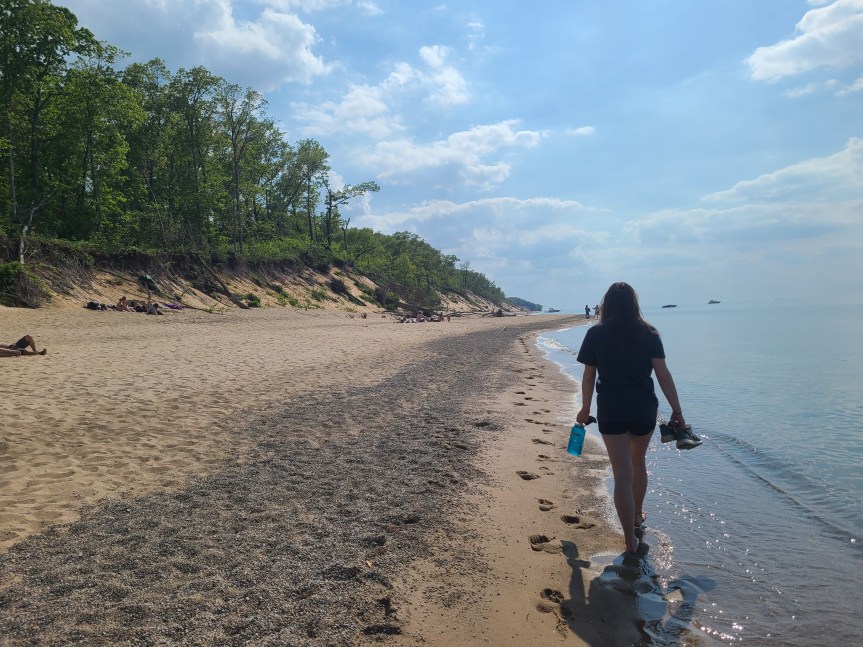
You don’t have to head to California or Florida for great beaches, the Great Lakes boasts some incredible beach day destinations as well: Indiana Sand Dunes is one of them. Along the southern border of Lake Michigan, Indiana Sand Dunes National Park has 15 miles of coastline available for its visitors. This is a great place for families with young kids. The sand is fine with fun stones kids can use on their sand sculptures. We’ve had fun burying people in the sand, creating artwork with little pebbles and building sandcastles. It’s also a great place for teaching kids to skip stones or swim. The lakebed has a very gradual decline, so the beach remains very shallow even as you wade out away from shore.
Porter Beach is pretty popular as it is right next to a large parking lot with a restaurant and pavilion, but there are plenty of beaches at the park so you don’t have to worry about sharing space. The shoreline is vast, so you can pretty much ensure having a spacious beach area as long as you’re willing to walk further down the beach. There are also some areas where large dunes run directly down to the water’s edge. Running down these dunes is an absolute blast if you can keep your feet underneath you, though make sure you are staying off dunes that are marked for revegetation or conservation purposes. It should be pretty obviously marked, but it’s always good to be doubly aware.
Historical Landmarks
If you’re looking for something on the historical side of the park, you might find the Century of Progress Architectural District interesting. We drove along this route, but you could also walk it. The district is made up of five buildings that were from the Homes of Tomorrow Exhibition featured during the 1933 Century of Progress World’s Fair. Some of the homes actually look like large mansions you might see today, while some might be further down the timeline. Either way, it’s always interesting to see what people in the past envision for the future and how accurate they end up being.
There are plenty of historical landmarks at the park, but this was the only one I’ve visited before. For more historic places to visit at the Indiana Sand Dunes, check out the National Parks Service’s website.
Visit the Indiana Dunes Visitor Center
Whenever you go to a national park, it’s always a good idea to stop by the Visitor Center. If you haven’t planned out your activities for the day, you can chat with the park rangers to get recommendations that fit your ideal itinerary and skill levels. At the Dorothy Buell Visitor Center, they also have orientation videos, educational displays and a gift shop. It’s also a great place to pick up your America the Beautiful National Parks pass if you plan to visit more parks this year.
Things to Know Before You Go
Stay on the trails
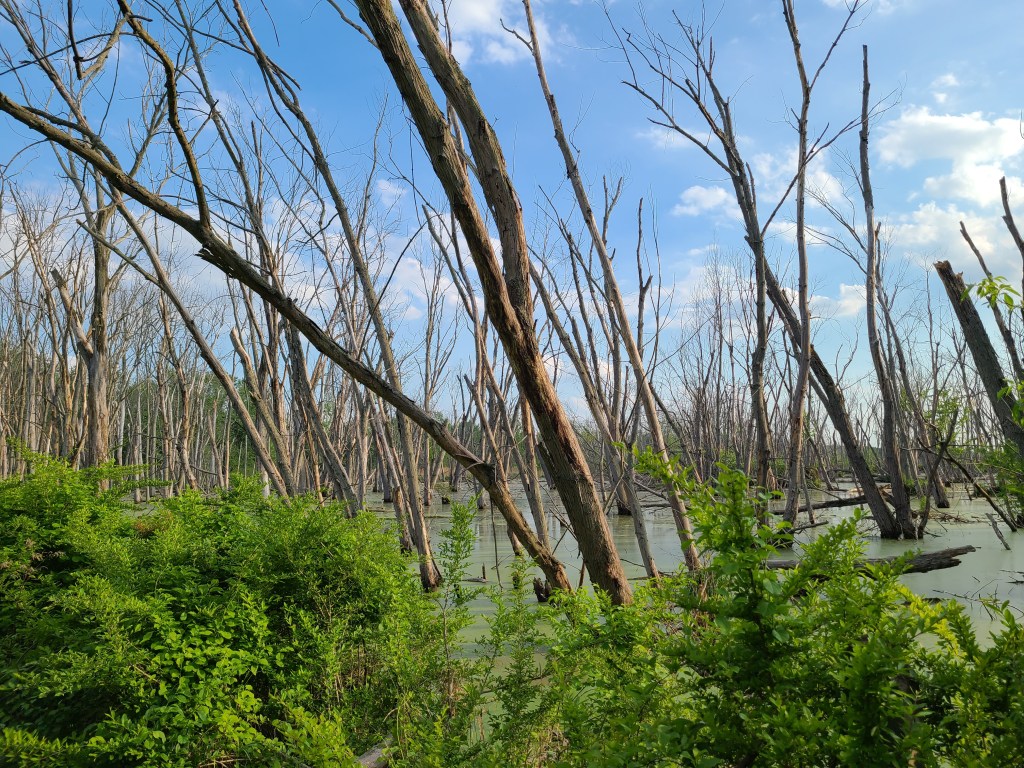
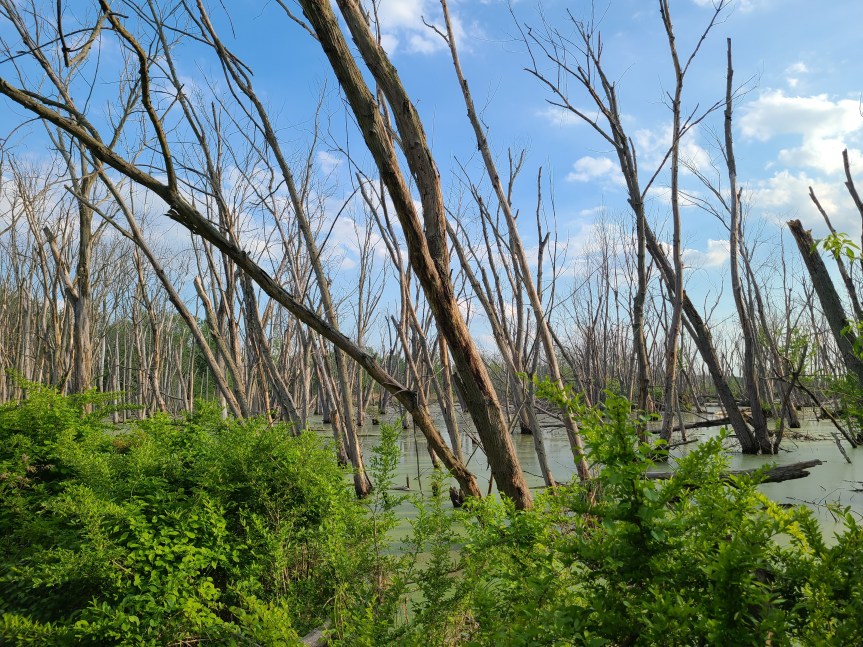
Indiana Sand Dunes National Park is actually one of the top five most biologically diverse national parks, so it’s important to protect these habitats when we visit. For the dune habitats especially, it is important to stay on designated trails and not climb dunes that are marked for revegetation. Parents, this is a great learning opportunity for teaching your kids about their environmental impact. Stepping on delicate vegetation like dune grass can rip up its roots, killing the plant. These grasses are what keep the dune stable, so without them, the dune starts to erode or break apart. Dune erosion can lead to dune migration, this is when dunes loose sand particles are redeposited by wind from one side of the dune to the other, eventually shifting the dune’s location. While this is a natural process, human footsteps are accelerating erosion and rapid movement of the dunes. In some areas of the park, you can see where dunes have actually taken over parking lots due to dune migration. Even just a few misplaced footsteps can squash, bury or expose the roots of a plant and kill it. By staying on designated paths, you can protect the dunes from being trampled and eroded.
Sensitive Species
Did you know that the prickly pear cactus can be found at the Indiana Sand Dunes? This species of plant is one of the dozens of sensitive species living in this dune habitat. But it’s not just plants, there are plenty of threatened wildlife living here as well. The piping plover is a small bird that is near threatened. Sandhill cranes, fowlers toads and monarch butterflies are almost among the at-risk wildlife in the park. As exciting as it may be to see wildlife on your visit, remember to respect their space and watch from a distance.
Conclusion
There’s plenty to do at this national park, so if you find yourself in the Midwest, plan for a day trip to Indiana Sand Dunes National Park. If you love this park and want to see it thrive, continue supporting it by revisiting or making a donation! Donations fund maintenance of the park, like maintaining hiking trails, fencing and facilities, but also go towards enhancing activities at the park. One of the best ways to support the park and the species that live there is to share your knowledge on how to proactively protect the dunes, the plants and the wildlife that live there. Whichever way you choose to support, I hope you enjoy our Midwest National Parks!







 kpctravels.com